Sport kinesiology
Research covers balance assessment in rhythmic gymnastics and reactive agility in football and volleyball. It also examines the effects of specific training interventions on selected kinanthropological characteristics.
KinezIQ — NPOO
Innovative diagnostic and training approaches for sport, adapted kinesiology and kinesiology education.
Research in focus
KinezIQ is an interdisciplinary study in applied kinesiology focused on the construction, validation and application of diagnostic and training protocols. It connects research in sport, work with people with disabilities and educational settings.
Its central aim is to improve the motor and functional capacities of children, athletes and people with disabilities through precise diagnostics and targeted interventions.
What we investigate
Research covers balance assessment in rhythmic gymnastics and reactive agility in football and volleyball. It also examines the effects of specific training interventions on selected kinanthropological characteristics.
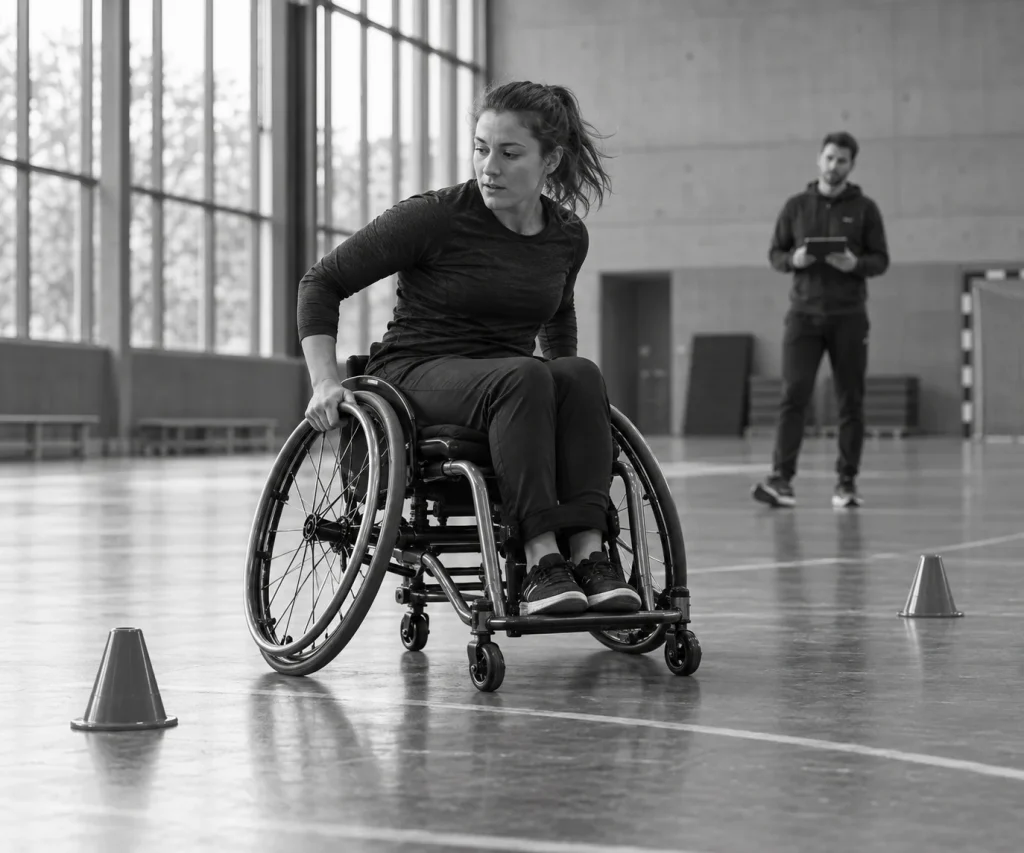
The project plans to construct and validate a specific reactive agility test for wheelchair basketball players. Alongside the diagnostic test, it investigates the effects of an experimental training protocol.
The project examines how parasport in physical education affects pupils' motor development, empathy and attitudes. It also studies the influence of an all-day school model on fine and gross motor skills in younger primary school pupils.
How we investigate
The project connects the development of measurement instruments, validation of their properties and evaluation of targeted interventions across different areas of applied kinesiology.
Expected contribution
The project aims to produce scientifically relevant, applicable findings that can improve assessment and the design of targeted interventions.
By connecting sport, adapted kinesiology and education, it is expected to contribute to motor and functional development across different groups, and to a better understanding of the role of parasport in pupils’ empathy and attitudes.
The project is a scientifically grounded interdisciplinary study in applied kinesiology, focused on the development, validation and application of innovative diagnostic and training protocols in sport, adapted kinesiology and kinesiology education. Its central aim is to improve the motor and functional capacities of children, athletes and people with disabilities through precise diagnostics and targeted interventions.
In sport kinesiology, the research focuses on balance assessment in rhythmic gymnastics and reactive agility in football and volleyball. It also evaluates the effects of specific training interventions on selected kinanthropological characteristics.
In adapted kinesiology, the project includes developing and validating a specific reactive agility test for wheelchair basketball players, alongside an analysis of the effects of an experimental training protocol on outcome and predictor variables.
In kinesiology education, the project examines the effects of introducing parasport into physical education on motor development, empathy and the attitudes of pupils without developmental disabilities. It also investigates the influence of the all-day school model on the development of fine and gross motor skills in younger primary school pupils.
The project is organised into several work packages, each with clearly defined objectives, methodologically rigorous approaches and validated measurement instruments, to support the scientific relevance and practical applicability of its findings.
Adjust how the page is displayed. Settings are remembered in this browser.